State-Specific Guidance in New Hampshire, and Why It Matters to You
Most United States law is state law. Rules on restrictive covenants, deposit returns, divorce procedure, eviction timing, debt collection, landlord entry, and estate administration all vary meaningfully between states. A generic answer that works elsewhere can be wrong in New Hampshire, and a letter built on the wrong state's framework is worse than no letter.
Where New Hampshire Changes the Answer
New Hampshire's most consequential variation is often not its own law but which state's law applies, because so many residents work across the Massachusetts line. Within the state, housing and consumer matters vary by notice and procedure, and property tax process differs from most states.
Those differences land hardest in employment and workplace questions, landlord and tenant matters, and small business and contract work, which between them account for most of what people here actually ask about.

The Local Layer in New Hampshire
Town government is the operative local unit and towns differ meaningfully on land use and assessment practice, more than county-based states.

Cross-Border Exposure in New Hampshire
Among the highest in the country relative to population. A large share of the workforce commutes to Massachusetts and holds agreements governed by that state.
Where a question spans two jurisdictions, naming both is the single most useful thing you can do, because a resource that answers for one and does not say so produces something that reads finished and is half right.

Why This Matters to You
If you live here and work there, a general resource will answer for one state and not tell you it did. That is worse than an incomplete answer because it reads as a finished one.
Five Kinds of Difference
State variation is not one thing. Knowing which kind you are dealing with tells you what to ask.
How long you have to act, and when the clock starts. Deadline differences are the most consequential because acting too late usually cannot be fixed, and acting too early can also fail.
Whether a rule applies to you at all, based on income, unit count, employer size, or circumstance. A conditional rule produces two opposite answers and which one is yours depends on your facts.
Whether a remedy or protection exists in your state at all. This is the difference people most often miss, because a national article describing a remedy does not say which states have it.
What must happen first, in what order, and in what form. Two states can grant the same right and require entirely different steps to exercise it.
How something is classified before any rule is applied. Community property is the clearest example: it changes the starting question rather than the answer, which is why importing another state's reasoning fails.
How the State Layer Works
-
Your jurisdiction is applied first
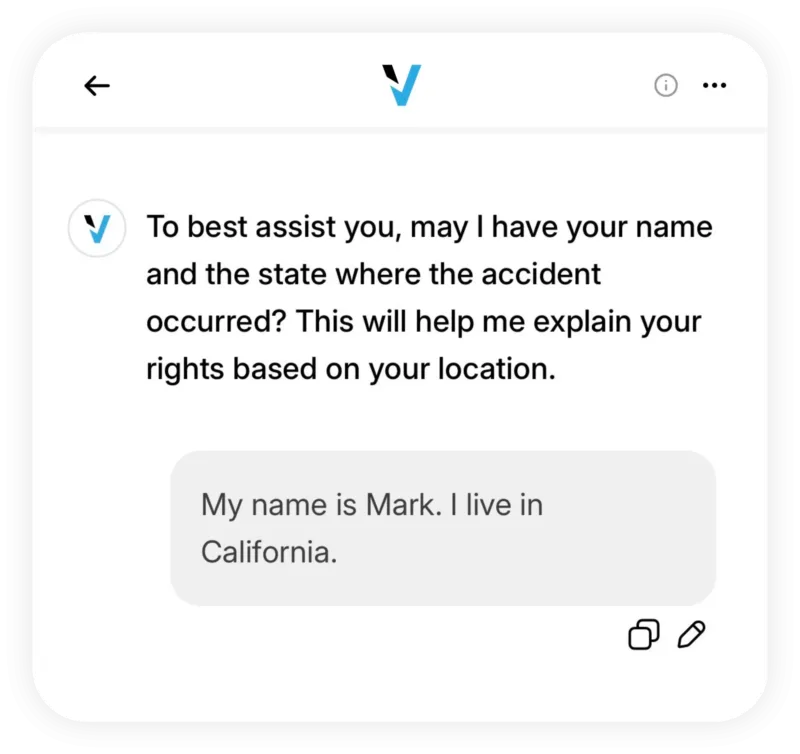
You set your state at signup or change it in settings. Every answer, document, and assessment runs through it, so you do not restate it on each question. If a specific matter is governed by a different state, say so in the conversation. -
Sub-state rules where they are dispositive
Rent regulation, short-term rental rules, rental registration, and some procedures are set by city or county. Where the local layer governs, it is surfaced rather than defaulting to state level. -
Cross-jurisdictional matters handled explicitly
For a contract governed by one state's law while you are in another, the answer separates which jurisdiction governs which issue, rather than picking one and not saying so. -
Currency and uncertainty stated honestly
Legal knowledge is updated on a rolling basis and older material is not treated as authoritative over a newer change. Where a rule is recently changed, actively disputed, or inconsistently applied, that is flagged rather than presented as settled.

Why There Are No Deadlines on This Page
One thing this page does not do: publish specific deadlines, dollar thresholds, or statute numbers. Those are exactly the details that change by amendment, and a figure that was right when a page was written and wrong when you read it is worse than no figure, because you will act on it. Ask inside a conversation and the current rule is applied to your actual facts, with the reasoning explained so you can verify it. If you want a citation for a letter, ask for it there rather than taking it from a marketing page.

Coverage
Trained on the statutes, codes, and major case law of every United States state plus the District of Columbia, across employment, housing, family, consumer, business, estate, personal injury, and traffic matters. New Hampshire is covered at the same depth as every other state, including the sub-state layer where it governs.

New Hampshire Frequently Asked Questions
I work in Massachusetts. Whose rules govern my job?
Frequently a mix, with different parts of the relationship governed by different states, and any choice-of-law clause in your agreement affecting but not settling it. Name both and the guidance separates them.
How do I set or change my state?
You enter it at signup and can change it in account settings at any time. If you are temporarily dealing with a matter governed by a different state, such as a contract with an out-of-state choice-of-law clause, say so in the conversation and both will be accounted for.
What about a contract governed by another state's law?
Cross-jurisdictional matters are handled explicitly. The answer explains which state's law governs which issue, how far a choice-of-law clause actually reaches, and how to think about venue and forum-selection provisions.
How current is the state law knowledge?
It is updated on a rolling basis, and where a rule has recently changed without established interpretation, that uncertainty is flagged rather than smoothed over. For anything where a deadline determines whether you keep a right, confirm the current figure in a conversation rather than relying on any published page.
What about United States territories, or other countries?
Territory coverage exists but depth varies, and local counsel is recommended more frequently there than for the fifty states and the District. Non-United States legal systems are outside scope entirely; for those, use local counsel or tools built for that jurisdiction.
Frequently Asked Questions
Ask a question with New Hampshire law applied from the start. No credit card required.
Are you a Lawyer? Connect with our Users!