Legal Documents Written for You, and What That Changes in New Hampshire
A great many situations in New Hampshire would be resolved by one letter that nobody writes. The deposit gets kept, the invoice goes unpaid, the notice goes unanswered, not because the position is weak but because composing a professional letter is a skill most people do not have and cannot cheaply hire.
The Letter New Hampshire Needs Most
New Hampshire's most needed drafted documents are a written request to a Massachusetts employer seeking confirmation on how a covenant applies, and a tank removal request establishing a timeline before winter.
Who Could Not Get One Written
Cross-border commuters whose question spans two jurisdictions, homeowners blocked from switching suppliers, and manufacturers reconciling conflicting agreements.
Those concentrate in employment and workplace questions and landlord and tenant matters, the two areas generating the highest volume from this state.
What Having It Changes
A request that names both jurisdictions and asks a precise question gets a precise answer. A vague concern gets a restatement of the agreement.
What Should Still Go to an Attorney in New Hampshire
Employment claims crossing state lines toward a formal filing, property tax appeals past the informal stage, and matters in court need counsel.
Why the Drafts Are Usable
-
Drafted from your facts, not a templateNotIncluded
The draft reflects your dates, amounts, relationship, and the relief you want. A templateNotIncluded with your name in the blanks is a different and lesser thing. -
Your state applied throughout
Drafted against the law of your jurisdiction rather than a national default, and you can specify a different governing jurisdiction when the agreement calls for one. -
Supporting authority referenced
Where citing authority strengthens a document, the draft references it and explains why. Verify any citation before you send something with your name on it. That is true of any drafted document from any source, and it is your signature at the bottom. -
Tone and length on request
Ask for firmer, softer, shorter, longer, or the same document in another language. Tone is frequently the difference between a letter that resolves something and one that entrenches it. -
Editable and exportable
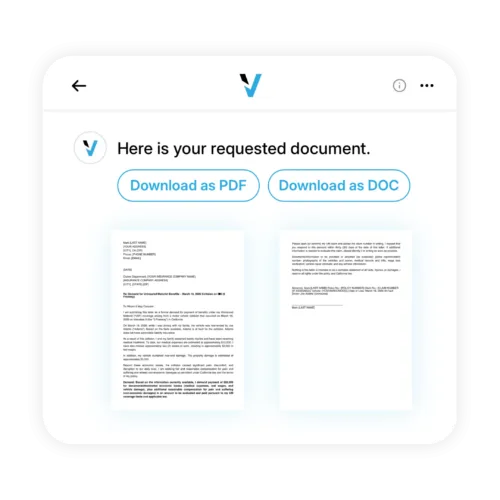
Edit in the conversation or export as DOCX, PDF, or text. Nothing is locked and nothing is final until you send it.
New Hampshire Frequently Asked Questions
Can a letter address a two-state question properly?
Yes, if you name both jurisdictions when you describe the situation. A letter that acknowledges which state governs which aspect reads as informed and is harder to deflect.
Are drafted documents legally binding?
A contract becomes binding when signed and a letter has effect when sent. The drafts are written to be sound for their purpose, but legal effect depends on how you use them. For high-stakes documents, have an attorney review before signing or sending.
Do drafts satisfy my state's execution requirements?
Drafts identify the execution requirements that apply, including witnessing and notarization where relevant. Whether an instrument is valid depends on following those requirements correctly, which is your responsibility. For wills, powers of attorney, and anything else where a formality error voids the document, have it reviewed before you execute it.
Can I use a drafted document in court?
Demand letters and small claims filings are commonly used in court-adjacent proceedings. For formal filings where procedural rules are strict, and for anything with a deadline or significant value, have an attorney review before filing.
Is there a per-document fee?
No. Drafting is bounded by your plan's monthly conversation allowance, and a single conversation can produce several documents. There is no separate charge per document.
Frequently Asked Questions
Describe your situation and get a draft written under New Hampshire law. Free on every plan, no credit card required.
Are you a Lawyer? Connect with our Users!