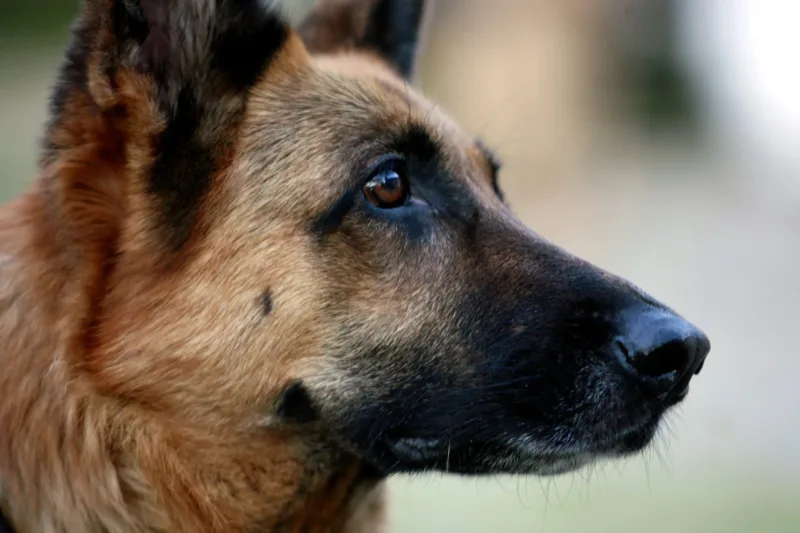
Dog Bite Legal Help:Strict Liability vs One Bite Rule, Owner Liability, and Insurance Coverage
Vikk AI provides instant dog bite guidance for all 50 U.S. states. It explains the dramatic distinction between strict liability states (most states) and one bite rule states (about 14 states), owner liability and landlord liability, available homeowners and renters insurance coverage, common injury types and their settlement ranges, and prepares your demand letter and case strategy. Free to start. No credit card required.
Dog bite cases have a unique legal framework that distinguishes them from other premises liability and personal injury claims. Most states have specific dog bite statutes that impose strict liability on dog owners (the owner is liable regardless of whether they knew the dog was dangerous). About 14 states still use the older common law 'one bite rule' (the owner is only liable if they knew or should have known the dog was dangerous). The distinction substantially affects the cases. In strict liability states, the question is simply whether the dog bit the plaintiff and whether the plaintiff was lawfully on the property. In one bite rule states, the central question is whether the owner had prior notice of the dog's dangerous propensities. Most dog bite cases are covered by homeowners or renters insurance through personal liability coverage (typically $100,000 to $500,000 limits, sometimes higher with umbrella). Some homeowners policies exclude specific breeds or have limits on dog bite coverage. The investigation of available insurance is essential. Whether you have just been bitten by a dog, you are dealing with the dog owner's insurance company, you are facing aggressive comparative negligence allegations (you provoked the dog, you were trespassing), or you are dealing with severe injuries especially for child victims, Vikk AI is your always-available legal research, claim preparation, and document drafting partner. For minor dog bites with limited treatment, Vikk AI can often handle the entire matter without retained counsel. For serious bites (substantial scarring, surgical interventions, child victims with face injuries, multiple bites), specialized representation typically makes financial sense even after contingency fees. Ask any question about your bite, your state's dog bite framework, owner and landlord liability, available insurance coverage, common defenses, and how to evaluate your case. Upload medical records, photographs of injuries and the dog, animal control reports, and any other documents and Vikk AI analyzes everything in plain English. Draft demand letters, claim documentation, and consultation preparation packages in minutes. When the case requires legal representation, Vikk AI suggests verified dog bite attorneys in your area or you can browse the directory yourself.
Who can be liable for a dog bite?
Multiple parties may be liable. Identifying all responsible parties is essential.
- Dog owner
- Dog keeper
- Landlord
- Property owner (other than dog owner)
- Person harboring the dog
- Parent of minor
- Animal control failures
- Kennel or boarding facility
What insurance covers dog bites?
Homeowners and renters insurance is the most common source of recovery. Investigation of all coverage is essential.
Most homeowners policies include personal liability coverage that extends to dog bites. Typical limits: $100,000 to $500,000. Some policies have higher limits or umbrella coverage on top. Coverage applies whether bite occurred on or off property.
Includes personal liability coverage similar to homeowners. Tenants with dogs typically have personal liability through renters policy that covers dog bites.
Some homeowners policies exclude specific breeds (Pit Bulls, Rottweilers, German Shepherds, Akitas, Doberman Pinschers, Wolf hybrids, Chow Chows). Breed exclusions vary by insurer and state. In some states (Pennsylvania, Michigan, others), breed-specific exclusions are limited or prohibited.
Some policies exclude coverage for dogs with prior bite history. Common after first bite where insurer learned of incident. Prior bites can void coverage for subsequent bites.
Some policies have specific sub-limits for animal-related injuries (often $25,000 or $50,000) below the general personal liability limit. Investigation of policy specifics required.
Many homeowners have umbrella policies providing coverage above the homeowners liability limits. Often $1 million or more in additional coverage. Investigation of all policies is essential for serious injury cases.
Generally does not cover dog bites unless dog was in vehicle and bite occurred during use of vehicle. Limited application.
Pays medical bills initially. Has subrogation rights against settlement.
What about landlord liability for tenant dogs?
Landlord liability for tenant-owned dogs is increasingly significant. Specific rules vary by state.
- General rule
- Knowledge requirement
- Ability to control
- Common areas
- Lease provisions
- State variations
- Public housing authorities
What evidence is critical?
Dog bite evidence preservation is time-sensitive and specific.
- Photographs of injuries
- Medical records
- Animal control report
- Photographs of dog
- Witness contact information
- Prior incident research
- Vaccination and registration records
- Owner identification
- Property records
- Pre-bite trigger evidence
How Vikk AI Helps With Your Dog Bite Case
Ask: Get state-specific answers, 24/7, in plain English
Ask any question about your case. Examples: "Is California strict liability under Cal. Civ. Code § 3342 or one bite rule?" "Does the homeowner's policy exclude German Shepherd or Pit Bull bites?" "Can I sue the landlord if my injury was from a tenant's dog?" "What evidence supports prior dangerous propensity in a Texas one bite rule case?" "Why are child face bite settlements substantially higher than adult bites?"
Upload: Have any document analyzed clause by clause
Upload medical records, photographs of injuries and the dog, animal control reports, homeowners or renters policy declarations if available, and any other documents. Vikk AI identifies the legal framework, all available coverage, and case theory.
Draft: Generate every document your case needs
Vikk AI drafts evidence preservation letters for animal control records and prior incident research; comprehensive demand letters citing applicable strict liability or one bite rule statutes; landlord liability theories when applicable; pediatric plastic surgery documentation packages for child victims; consultation preparation packages for specialized dog bite counsel; and translations of insurance correspondence into plain English.
Ready to start? Begin a free dog bite conversation in 60 seconds, no credit card required.
Real Walkthrough:How a Child's Family Recovered $325K After a Severe Face Bite Through Strict Liability and Insurance Investigation
A 6-year-old child was bitten in the face by a neighbor's German Shepherd while visiting the neighbor's yard with parents' permission. The bite caused significant lacerations requiring 28 stitches and three subsequent reconstructive surgeries over 18 months. Medical bills exceeded $42,000; future plastic surgery projected through age 18 estimated at $25,000-$45,000; pain and suffering and lasting scarring substantial. The dog had no prior bite history. The neighbor had homeowners insurance with $300,000 personal liability coverage and $1 million umbrella. The case was filed in California (strict liability state under Cal. Civ. Code § 3342). The family retained a personal injury attorney specializing in dog bite cases on contingency at 33 percent and used Vikk AI for case organization.

Step 1: Vikk AI explained California's strict liability framework
California Cal. Civ. Code § 3342 imposes strict liability on dog owners for bites on property where person is lawfully present. The plaintiff does not have to prove prior dangerous propensities (no one bite rule in California). The child was lawfully present on the property (parents' permission). The dog bit the child. These two facts established strict liability without further proof. Provocation defense was available but inapplicable; child was simply petting the dog when bite occurred.
Step 2: Investigated all insurance coverage
Vikk AI helped investigate available coverage: homeowners $300,000 personal liability, umbrella $1 million additional coverage, no breed exclusion (German Shepherds covered under this policy), no prior bite history limiting coverage. Total available: $1.3 million. Coverage analysis was favorable.
Step 3: Documented child injuries and projected future care
Pediatric plastic surgeon evaluations established: 28 stitches in face, three reconstructive surgeries completed (cost $32,000 each), additional 2-4 surgeries projected through adulthood ($35,000 each), permanent visible scarring on face, ongoing emotional therapy for trauma. Photographic documentation of injuries throughout treatment showed healing progression and lasting effects.
Step 4: Demand letter and negotiation
Comprehensive demand letter for $750,000 with: detailed injury documentation, three completed surgeries plus projected future care, pediatric plastic surgeon testimony about lasting effects, photographic documentation of scarring, emotional therapy records, comparable case research showing settlements for child face bites typically $300K-$500K. The carrier responded with $125,000. Through 4 rounds of negotiation over 4 months, including life care plan exchange and pediatric expert depositions, settled at $325,000.
Step 5: Settlement breakdown
Settlement of $325,000. Less attorney's contingency at 33 percent ($107,250). Less reimbursement of advanced costs ($8,500 for plastic surgery expert, deposition fees). Less health insurance subrogation (negotiated to $32,000 from $48,000 demanded). Net recovery to family: $177,250 plus structured settlement of $125,000 to be paid as needed for future surgeries through age 25. Effective total recovery: substantial portion preserved for future care needs.
Total time: 14 months from bite to settlement. Total upfront cost: $0 (contingency-fee structure with costs advanced by attorney). Net recovery to family: $177,250 plus structured future care. The case demonstrates several key dog bite principles: (1) strict liability simplifies the legal case (California's framework eliminated need to prove prior dangerous propensities), (2) coverage investigation reveals total available recovery (homeowners + umbrella = $1.3M ceiling), (3) child face bite cases warrant specialized representation, (4) future care projections through adulthood substantially affect settlement value, (5) structured settlements protect children's recoveries for ongoing needs.
Why Vikk AI Is the Most Trusted AI Legal Assistant for This Topic
Built specifically for U.S. personal injury law, not retrofitted from a general chatbot
Generic AI tools like ChatGPT and Gemini frequently invent statutes that do not exist or apply the wrong state's rules to your situation. Vikk AI is purpose-built for U.S. personal injury law including state-by-state negligence rules, comparative fault systems, statutes of limitations, damages caps, and insurance frameworks.
Automatic state localization on every answer
You do not have to remember to mention your state. Vikk AI knows your jurisdiction from the start of your conversation and applies the correct comparative negligence rule, the correct statute of limitations, the correct damages framework, and the correct insurance requirements, automatically, on every question.
Privacy by default, with awareness of insurance company tactics
Your conversations about accidents, injuries, medical treatment, and damages are encrypted in transit and at rest. They are never sold, never shared with third parties, and never used to train any public AI model. Vikk AI also helps you understand how insurance companies use recorded statements, social media, and surveillance against injured claimants.
Honest about contingency fees and when retained representation is worth the percentage
Personal injury attorneys typically work on contingency (no fee unless you recover, then typically 33 to 40 percent of the settlement). For most serious injury cases, retained representation produces net recoveries substantially higher than DIY claims even after the contingency percentage. Vikk AI helps you evaluate when retained representation is worth the percentage and when it is not.
Frequently Asked Questions
-
Do I have to prove the dog had bitten before?
Depends on your state. Strict liability states (most states): No, the owner is liable regardless of prior history. One bite rule states (about 14 states including Texas, Virginia, Tennessee): Yes, you must establish the owner knew or should have known the dog was dangerous. Vikk AI walks you through your state's specific framework.
-
Who is liable for a dog bite?
Primary defendant is dog owner. Other potentially liable parties: dog keeper (temporary control), landlord (if knew of dangerous propensities), property owner (if not dog owner), person harboring dog, parent of minor owner. Investigation of all liable parties expands available recovery.
-
Does homeowners insurance cover dog bites?
Most homeowners and renters policies cover dog bites through personal liability coverage (typically $100,000 to $500,000 limits). Some policies exclude specific breeds (Pit Bulls, Rottweilers, others). Some have prior bite exclusions. Investigation of policy specifics required.
-
What if the dog had no prior bite history?
In strict liability states (most states), no prior history is required. The owner is liable based on the bite itself. In one bite rule states, no prior history can be a complete defense; the case becomes much more difficult. Vikk AI helps identify what evidence might support liability even in one bite rule states.
-
What is the one bite rule?
Common law rule in about 14 states (Texas, Virginia, Tennessee, others). Owner liable only if knew or should have known dog was dangerous. Established through prior bites, aggressive behavior, complaints, or other evidence of dangerous propensities. Strict liability states have replaced this rule in most jurisdictions.
-
Can I sue the landlord for my tenant's dog bite?
Sometimes, depending on state and circumstances. Landlord typically liable only if: (1) knew dog was dangerous (prior incidents, complaints), and (2) had ability to take action (eviction, lease enforcement). Public housing has additional considerations. State analysis required.
-
How much is a dog bite worth?
Highly variable. Single puncture: $5K-$25K. Multiple punctures with infection: $25K-$75K. Deep tissue with stitches: $30K-$150K. Significant scarring (visible areas): $75K-$500K+. Surgical reconstruction: $200K-$1M+. Child face bites: $500K-$5M+. Severe attacks: $1M-$10M+.
-
What about provocation as a defense?
Most common defense in dog bite cases. Provocation must rise above ordinary contact. Petting, approaching, walking near dog typically not provocation. Hitting, kicking, threatening, taking food are typical provocation. Children are generally not held to adult provocation standards.
-
Should I file an animal control report?
Yes, immediately. Animal control investigation creates official record, may identify dog and owner, may document prior incidents. Some states require reporting bites. Animal control records are typically discoverable in litigation.
-
What if my child was bitten?
Child cases warrant specialized representation. Child injuries to face are particularly devastating. Settlement values are substantially higher than adult cases due to ongoing surgical needs, lifelong scarring impact, emotional damage, and jury sympathy. Pediatric plastic surgeon evaluations are typically required for damage assessment.
-
Can I use Vikk AI for the entire dog bite case?
For minor cases (single puncture, limited treatment), often yes. For serious bites, child victims, multi-defendant cases, or cases involving permanent scarring, hire an attorney to lead. The contingency percentage is typically far less than the recovery increase from professional representation.
Describe your situation. Get your state's rules in plain English. No credit card. 60 seconds to sign up.
Are you a Lawyer? Connect with our Users!