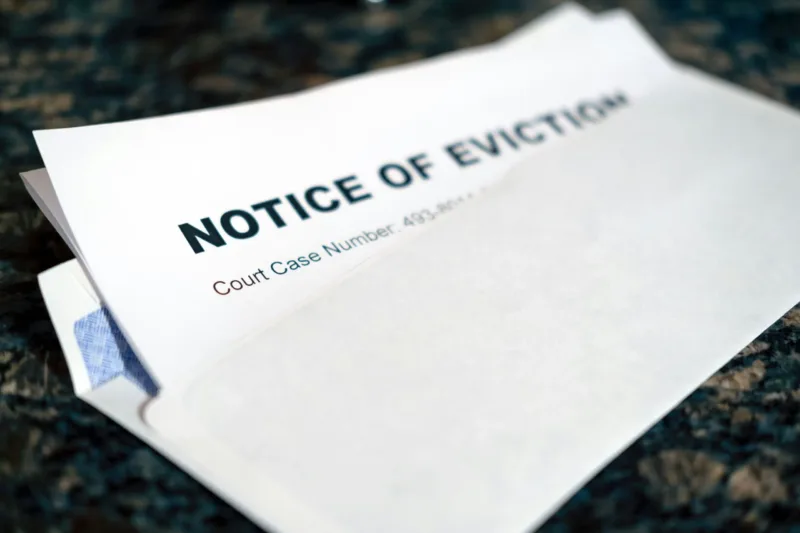
Eviction Legal Help:Defense Strategies, State Procedures, and Just-Cause Protections
Vikk AI provides instant eviction guidance for all 50 U.S. states. It explains state-specific eviction procedures (California unlawful detainer, New York summary process, Texas eviction), just-cause requirements (California AB 1482, Oregon SB 608, Washington statewide, New Jersey Anti-Eviction Act, many cities), notice requirements, defenses, and prepares your eviction defense. Speed is critical: most eviction proceedings move on tight timelines. Free to start.
Eviction is the legal process by which a landlord recovers possession of rented premises. The procedures are state-specific and typically move on tight timelines that defeat unprepared tenants. California uses 'unlawful detainer' under Code of Civil Procedure §§ 1161-1179a; New York uses summary holdover and nonpayment proceedings under RPAPL Article 7; Texas uses eviction under Property Code § 24.002. Most states require specific notice periods before filing (typically 3-14 days for nonpayment, longer for lease violations or no-cause termination), specific notice content, and specific service procedures. Failure to comply with notice requirements typically defeats the eviction proceeding.
Just-cause states have substantially expanded tenant protections.
Whether you have just received an eviction notice, you have been served with eviction court papers, you are facing imminent eviction, or you are evaluating your eviction defense, Vikk AI is your always-available legal research, document drafting, and case preparation partner. Vikk AI does not replace a landlord-tenant attorney for eviction defense. Eviction defense is among the most time-critical areas of law, and many tenants qualify for free representation through legal aid, Right to Counsel programs (NYC, San Francisco, Newark, Cleveland, Philadelphia, Connecticut, others), or tenant rights organizations. What Vikk AI does is help you understand the eviction process in your state, identify defenses, draft answer documents, and prepare for hearings. The most common cause of eviction default is failure to file a timely answer or appear at hearing. Ask any question about your situation, your state's eviction procedure, applicable just-cause rules, common defenses, and how to evaluate your case. Upload eviction notices, complaints, leases, communications, and any other documents and Vikk AI analyzes everything in plain English. Draft answers, defenses, demurrers, and consultation preparation packages in minutes. When the case requires legal representation, Vikk AI suggests verified landlord-tenant attorneys in your area or helps you find legal aid.
What are the major eviction reasons?
Eviction reasons fall into specific categories with different procedures.
Most common reason. Requires pay-or-quit notice typically 3-14 days depending on state. Tenant typically can cure by paying rent owed before notice expires. Critical to understand state-specific pay-or-quit period.
Tenant violated specific lease provision: unauthorized pets, additional occupants, lease violations, illegal activity, property damage. Requires cure-or-quit notice (typically 3-30 days) where violation is curable. Non-curable violations (illegal activity) may require shorter notice.
Tenant remains after fixed-term lease expires without renewal. Different procedure depending on whether lease auto-renewed or simply expired. May require 'unlawful detainer for holdover' or termination notice depending on state.
Landlord ends month-to-month tenancy. Requires termination notice (typically 30 days, 60 days for tenancies over 1 year in California per Cal. Civ. Code § 1946.1, longer in some states). In just-cause states, requires specific cause.
Owner or family member intends to occupy unit. Permitted reason in many just-cause jurisdictions. Specific compliance requirements (relocation assistance, time limits, good faith).
Landlord conducting substantial renovation requiring tenant departure. Permitted reason in many just-cause jurisdictions with specific compliance.
Landlord taking property off rental market (Ellis Act in California). Specific procedural requirements.
Landlord demolishing building. Specific compliance requirements.
Order requiring tenant departure (condemnation, public health). Specific procedure.
Tenant using premises for illegal activity (drug sales, prostitution, gambling). Often shorter notice and faster procedure. Some states allow expedited removal.
What are common eviction defenses?
Multiple defenses may apply. Identifying applicable defenses essential.
- Improper notice
- Tender of rent (nonpayment cases)
- Habitability violations
- Retaliation
- Discrimination
- No just cause (just-cause states)
- Cure of violation
- Estoppel/waiver
- Defective lease
- Bankruptcy
- Servicemember protections
- Domestic violence protections
What about California unlawful detainer specifically?
California has the most-used eviction procedure with specific defenses. California also has just-cause protections under AB 1482.
3-day notice to pay rent or quit (Cal. Civ. Code § 1161, requires specific itemization of rent owed). 3-day notice to perform covenant or quit (lease violation). 30-day notice to terminate (under 1 year tenancy) or 60-day notice (1+ year tenancy) under Cal. Civ. Code § 1946.1.
Cal. Civ. Code § 1946.2 (effective 2020) requires just cause to terminate tenancies in covered properties (over 15 years old). Permitted reasons: at-fault (nonpayment, violations) or no-fault (owner move-in, substantial rehab, withdrawal from market, government order). No-fault termination requires relocation assistance or rent waiver.
Filed in superior court. Specific complaint form. Tenant typically has 5 court days to respond after service.
Answer (most common), demurrer, motion to quash service. Default judgment if tenant fails to respond within 5 court days.
Eviction trials proceed quickly, typically 20 days from filing if not delayed by motions. Tenant has limited discovery rights.
Improper notice (most common defense), tender of rent, habitability defense (Green v. Superior Court breach of warranty of habitability defense), retaliation (Civ. Code § 1942.5 rebuttable presumption when eviction within 6 months of protected activity), no just cause under AB 1482, COVID-19 era protections in some local jurisdictions.
California Code of Civil Procedure § 1161.2 provides for sealing of eviction records in certain circumstances (favorable to tenant or judgment paid). Substantial benefit to tenants for future housing applications.
San Francisco, Oakland, Berkeley, Los Angeles, Santa Monica have local just-cause ordinances often broader than state AB 1482. Specific local research essential.
What about New York summary process?
New York eviction proceedings are particularly fast and tenant-friendly with substantial protections.
What about just-cause eviction generally?
Just-cause states require landlord to articulate specific cause for eviction. Significant tenant protection.
Effective 2020. Covers properties over 15 years old. At-fault causes: nonpayment, lease violations, criminal activity. No-fault causes: owner move-in, substantial rehab, withdrawal from rental market, government order. No-fault termination requires relocation assistance (1 month rent or rent waiver of last month). Tenancies over 1 year covered.
Statewide just-cause and rent control (effective 2019). Covers most residential rentals after first year of tenancy. At-fault causes plus specific landlord causes. Annual rent increase capped at CPI+7%. Major tenant protection.
18.660. Statewide just-cause for residential tenancies. At-fault causes plus 'good cause' standard. Specific procedural requirements.
Broad just-cause requirements for most residential tenancies. Specific list of permitted causes. Long-standing tenant protection.
San Francisco Rent Ordinance, Oakland Just Cause for Eviction Ordinance, Berkeley Rent Stabilization, Los Angeles Just Cause, Newark Just Cause, Jersey City Just Cause, Portland (Oregon), Seattle, others. Each has specific requirements.
Tenants over specific age, tenants with disabilities, tenants with children, long-term tenants. Some local ordinances provide additional protections for these categories.
Many just-cause jurisdictions require relocation assistance for no-fault evictions. Amount typically equivalent to 1-3 months rent, sometimes more for protected tenants.
Most just-cause jurisdictions allow tenants to cure curable violations (nonpayment, lease violations) within specific period before eviction can proceed.
Just-cause statutes typically include strong retaliation protections. Eviction within specific period after protected activity creates presumption of retaliation.
What about eviction in non-just-cause states?
Most states do not have statewide just-cause requirements. Different framework but tenants still have important protections.
- Texas eviction
- Florida eviction
- Georgia eviction
- North Carolina eviction
- Common protections in non-just-cause states
- Local just-cause ordinances in non-just-cause states
- End-of-lease protections
- Sealed records and screening
What about specific tenant protections during eviction?
Specific protections may apply to tenants in particular circumstances.
50 U.S.C. § 3901 et seq. Active-duty military service members have eviction protections. Court must stay proceedings during deployment if requested. Lease termination rights upon orders. Substantial federal protection.
34 U.S.C. § 12491. Domestic violence, dating violence, sexual assault, stalking survivors in federally subsidized housing have specific protections. Cannot evict for incidents related to abuse. Bifurcation of household possible.
Many states extend domestic violence protections to private market housing. Lease termination rights, freedom from eviction for incidents related to abuse, protection of records.
Federal FHA, ADA, state and local laws require reasonable accommodations and modifications. Eviction defenses based on landlord's failure to accommodate disability. Therapy animals, accessibility, lease modifications.
NYC, San Francisco, Newark, Cleveland, Philadelphia, parts of Connecticut, Maryland (limited), and others provide free attorney representation in eviction. Income limits typically apply. Substantial procedural advantage.
Available in most areas. Free or low-cost representation for income-eligible tenants. Critical for effective eviction defense.
Many courts have mediation programs that can resolve eviction without trial. Often results in settlement allowing time to leave or cure.
Emergency Rental Assistance Programs (state-administered federal funds), local rental assistance, charity programs. Funds for back rent can prevent eviction.
How Vikk AI Helps With Your Eviction Case
Real Walkthrough:How a Tenant Defeated Unlawful Detainer Through Improper Notice and Habitability Defense in California
A 41-year-old tenant in Los Angeles received a 3-day notice to pay rent or quit for $4,800 in rent owed. She had withheld 2 months of rent due to ongoing habitability issues including persistent leak, mold, and broken HVAC. The notice did not specify the months for which rent was claimed and did not include the names of acceptable persons to receive payment as required by California law. She used Vikk AI to evaluate her case, then accessed legal aid representation through Inner City Law Center.

Step 1: Vikk AI helped identify defenses
Vikk AI walked through California unlawful detainer defenses. Improper notice analysis: California Civ. Code § 1161(2) requires specific elements in 3-day notice including: amount of rent owed, period for which rent is due, name and address of person to whom rent should be paid, identification of bank or other person to whom payment may be made (if available). Her notice did not specify months covered or include acceptable payment recipients. Notice was facially defective and would defeat the unlawful detainer. Plus habitability defense available under Green v. Superior Court for the underlying rent withholding.
Step 2: Documentation gathering
Vikk AI helped her organize: lease, rent payment history showing she had paid every prior month, photos and videos of habitability issues going back 6 months, all communications with landlord requesting repairs (texts, emails), code enforcement complaint and inspection report, the defective 3-day notice. Documentation supported both improper notice and habitability defenses.
Step 3: Answer to unlawful detainer
Vikk AI helped her draft the answer to unlawful detainer (with attorney guidance from Inner City Law Center). Answer raised: (1) Improper notice (failed to comply with Cal. Civ. Code § 1161(2) requirements), (2) Breach of warranty of habitability (Green v. Superior Court defense, Cal. Civ. Code § 1941, 1942), (3) Retaliation (Cal. Civ. Code § 1942.5 rebuttable presumption from code enforcement complaint within 6 months). Filed within 5 court days as required.
Step 4: Trial and settlement
Court found notice was facially defective. Court would have dismissed unlawful detainer based on notice alone. Habitability defense supported rent abatement of approximately 35% for the 2 months in question. The landlord agreed to settlement: dismissal of unlawful detainer, $1,200 rent abatement (35% of 2 months) leaving balance of $3,120 owed, structured payment plan over 6 months at $520/month, repairs to be completed within 30 days. She kept the unit and her tenancy continued.
Step 5: Final outcome
Total time: 6 weeks from notice to settlement. Total cost: $0 (legal aid representation). She kept her tenancy, achieved rent abatement, secured repair commitments, and avoided having an eviction on her record. The case demonstrates the power of California's strong tenant protections combined with timely legal aid assistance.
Total time: 6 weeks. Total cost: $0 (legal aid). Outcome: tenancy preserved, rent abatement, repair commitments, eviction record avoided. The case demonstrates several key eviction principles: (1) improper notice is the most common eviction defense and very successful in California, (2) habitability defenses can be combined with notice defenses, (3) legal aid representation is often available for low-income tenants in eviction, (4) settlement often achieves better outcome than trial, (5) sealed eviction records under Cal. Code Civ. Proc. § 1161.2 protect future housing applications.
Why Vikk AI Is the Most Trusted AI Legal Assistant for This Topic
Built specifically for U.S. landlord-tenant law, not retrofitted from a general chatbot
Generic AI tools like ChatGPT and Gemini frequently invent statutes that do not exist or apply the wrong state's rules to your situation. Vikk AI is purpose-built for U.S. landlord-tenant law including state-specific eviction procedures, security deposit rules, habitability standards, rent control jurisdictions, and the deadlines and notice requirements that defeat many cases on technicalities.
Automatic state and city localization on every answer
Landlord-tenant law is hyperlocal. State law sets baseline; cities and counties often have additional protections. Vikk AI knows your jurisdiction from the start of your conversation and applies the correct state and local rules for evictions, security deposits, habitability, rent control, and notice requirements automatically on every question.
Privacy by default, with awareness of housing relationship sensitivity
Your conversations about your housing situation, lease, and disputes are encrypted in transit and at rest. They are never sold, never shared with third parties, and never used to train any public AI model. Housing decisions affect families and stability; Vikk AI respects that.
Honest about case viability and the cost of litigation
Many landlord-tenant disputes are best resolved through tenant rights organizations, mediation, or small claims court rather than full litigation. Vikk AI helps you evaluate which path makes sense for your situation. Some cases (eviction defense, illegal lockout, housing discrimination) typically warrant attorney representation; others (security deposit disputes, simple lease disputes) often do not.


Frequently Asked Questions
-
What is an eviction?
Legal process by which landlord recovers possession of rented premises. State-specific procedures (California unlawful detainer, New York summary process, Texas eviction). Requires notice, court proceedings, and writ of execution. Self-help eviction prohibited.
-
How fast does eviction move?
Typically 30-60 days from notice to eviction in non-just-cause states without defenses. With defenses, can extend significantly. California unlawful detainer typically resolves in 1-2 months without defenses; 3-6 months with active defense. New York summary process similar timeline.
-
What is just-cause eviction?
Requirement that landlord articulate specific cause for eviction. California AB 1482 covers properties over 15 years old. Oregon SB 608 covers most residential. Washington statewide. New Jersey broadly. Many cities. Substantially expanded tenant protection.
-
Can I represent myself in eviction?
Possible but not recommended for most. Eviction defense is technical and time-critical. Legal aid often free for income-eligible tenants. NYC, San Francisco, Newark, Cleveland, Philadelphia, Connecticut have Right to Counsel programs. Tenant rights organizations provide assistance.
-
What are common eviction defenses?
Improper notice (most common), tender of rent (nonpayment cases), habitability violations, retaliation, discrimination, no just cause (just-cause states), cure of violation, defective lease, bankruptcy stay, military protections, domestic violence protections.
-
What is improper notice?
Notice that didn't comply with state requirements: incorrect content, wrong notice period, improper service. Most common eviction defense. California Civ. Code § 1161 has specific notice requirements. Notice defects often defeat eviction even if substantive merits are clear.
-
What if I cannot pay rent?
Multiple options. Emergency Rental Assistance Programs (state-administered federal funds). Local rental assistance programs. Charity programs. Negotiate payment plan with landlord. Apply for legal aid. Bankruptcy protection in some cases. Avoid abandoning the unit.
-
Can I be evicted for habitability complaints?
Generally no, retaliation prohibited. Most states create rebuttable presumption of retaliation when eviction within specific period (California 6 months under Civ. Code § 1942.5). Defense to eviction plus separate civil claims.
-
What is repair and deduct?
Tenant remedy for habitability violations. Specific procedure: landlord notice, reasonable cure time, repairs by tenant, deduction from rent. California Civ. Code § 1942 limits to 1 month rent. Specific state procedures must be followed.
-
How do I find legal aid?
Federal Legal Services Corporation network: lsc.gov. State legal aid associations. State bar referral services. Local tenant rights organizations. NY Legal Services NYC, California legal aid network, etc. Income limits typically below 200-250% federal poverty level.
-
Can I use Vikk AI for eviction defense?
For documentation, defense identification, and answer drafting, yes. For trial representation, hire attorney (often free through legal aid). Eviction is time-critical and benefits from professional representation. Vikk AI prepares you for that representation.
Describe your situation. Get your state's rules in plain English. No credit card. 60 seconds to sign up.
Are you a Lawyer? Connect with our Users!