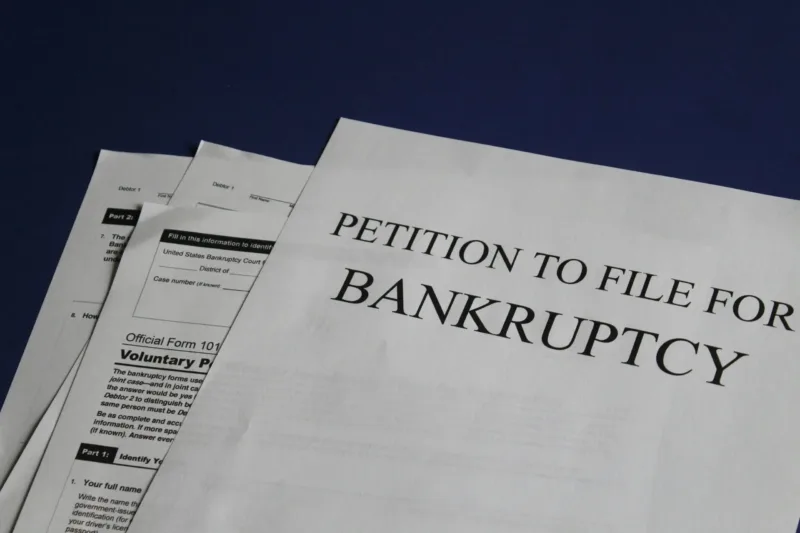
Bankruptcy and Debt Legal Help:Federal Bankruptcy Code, FDCPA Protections, and Debt Relief Options
Vikk AI provides instant bankruptcy and debt guidance for all 50 U.S. states. It explains the Bankruptcy Code (Title 11), the choice between Chapter 7 (liquidation) and Chapter 13 (repayment plan), FDCPA debt collection protections, debt settlement strategy, wage garnishment limits, foreclosure defense, repossession rights, credit report disputes, and prepares your case. Free to start. No credit card required.
Bankruptcy and debt issues are governed by a complex mix of federal and state law.
Whether you are facing collection lawsuits, wage garnishment, foreclosure, repossession, dealing with abusive debt collectors, considering bankruptcy, or evaluating any debt-related matter, Vikk AI is your always-available legal research, claim preparation, and document drafting partner. Many debt issues can be handled through Vikk AI alone, particularly FDCPA violation claims, credit report disputes, and statute of limitations defenses to old debts. Bankruptcy filings benefit substantially from attorney representation due to procedural complexity. Many areas have free legal aid for low-income individuals facing financial difficulties. Ask any question about your situation, the specific rules in your state, applicable federal protections, common pitfalls, and how to evaluate your case. Upload bills, collection letters, court documents, credit reports, and any other documents and Vikk AI analyzes everything in plain English. Draft FDCPA demand letters, credit report dispute letters, motions to vacate default judgments, exemption claims, and consultation preparation packages in minutes. When the case requires legal representation, Vikk AI suggests verified bankruptcy and debt attorneys in your area or you can browse the directory yourself.
What are the major federal and state laws governing bankruptcy and debt?
Multiple federal statutes provide the foundation; state laws add critical layers.
Federal bankruptcy law. Establishes Chapters 7, 9, 11, 12, 13, 15. Administered by federal bankruptcy courts. Creates automatic stay, discharge, exemptions framework. Most fundamental law for consumer bankruptcy.
15 U.S.C. § 1692 et seq. Federal protection against abusive debt collection by third-party debt collectors. Prohibits harassment, false representations, unfair practices. Statutory damages up to $1,000 plus actual damages plus attorney fees. Critical consumer protection.
15 U.S.C. § 1681 et seq. Governs credit reporting accuracy. Right to dispute inaccurate information. Reinvestigation by credit bureaus. Statutory damages and attorney fees for violations.
15 U.S.C. § 1671 et seq. Federal wage garnishment limits: maximum 25% of disposable earnings or amount over 30x federal minimum wage, whichever less. State laws often more protective.
15 U.S.C. § 1601 et seq. Disclosure requirements for consumer credit. Right of rescission for some loans. Mortgage protections including ability to repay rules.
12 U.S.C. § 2601 et seq. Mortgage servicing requirements. Loss mitigation procedures. Notice requirements for foreclosure.
50 U.S.C. § 3901 et seq. Protections for active-duty military: 6% interest cap on pre-service debts, foreclosure protections, eviction protections, default judgment protections.
2005 amendments to bankruptcy code. Means test for Chapter 7 eligibility. Mandatory credit counseling and debtor education. Substantially modified consumer bankruptcy.
Each state's exemptions in bankruptcy. Homestead, motor vehicle, household goods, retirement, life insurance, others. Vary dramatically. State opt-out from federal exemptions in many states.
State-specific laws often exceeding FDCPA. California Rosenthal Act (covers original creditors plus third-party collectors). Texas, Florida, others have specific consumer protections.
Time limits on suing for debts: 3-15 years depending on state and debt type. Critical defense to old debts. Acknowledgment can restart clock in some states.
Maximum interest rates. Vary substantially. Specific exceptions for credit cards (issuing state law applies).
What are the major bankruptcy and debt claim categories?
Multiple distinct claim and case types covered.
- Bankruptcy filings
- Debt settlement
- FDCPA claims
- Credit report disputes
- Collections lawsuits
- Wage garnishment
- Foreclosure defense
- Repossession
- Specific debt types
- Discharge of debt
- Identity theft
- Statute of limitations
Should I file bankruptcy?
Bankruptcy is powerful but not always the right choice. Specific factors determine.
Substantial unsecured debt (typically $10,000+) with no realistic ability to pay. Active wage garnishment, lawsuits, or foreclosure threats. Need for fresh start to rebuild financial life. Substantial income but overwhelming debt (Chapter 13).
Debt is small enough to settle or pay off. Most debt is non-dischargeable (recent taxes, child support, student loans typically, criminal restitution). Substantial valuable assets that exceed exemptions. Recent transfers that could be challenged.
Debt settlement, FDCPA defenses, statute of limitations defenses, debt consolidation, credit counseling, payment plans with creditors, hardship programs.
Liquidation. Faster (4-6 months). Eliminates most unsecured debt. Requires means test eligibility. Some property may be lost (above exemptions). Cannot file again for 8 years.
3-5 year repayment plan. Allows keeping property. Cure mortgage arrears. Lien stripping for underwater junior mortgages in some cases. Requires regular income. Cannot file Chapter 7 again for 8 years.
Compare income to state median. Below median: presumed eligible for Chapter 7. Above median: complex calculation; may be required to file Chapter 13.
Bankruptcy stays on credit report for 7 years (Chapter 13) or 10 years (Chapter 7). Initial credit score drop substantial. Can rebuild credit during and after bankruptcy.
Required pre-filing credit counseling (within 180 days before filing). Plus post-filing debtor education before discharge. Specific approved providers.
Chapter 7: typically $1,500-$3,500 plus $338 filing fee. Chapter 13: typically $4,000-$6,000 (often paid through plan) plus $313 filing fee. Specific to jurisdiction and case complexity.
Total debt amount and dischargeability. Income relative to expenses. Property to protect. Pending lawsuits, garnishments, foreclosures. Strategic considerations specific to case.
What evidence is critical in bankruptcy and debt cases?
Documentation is foundation of most bankruptcy and debt cases.
- Income documentation
- Asset documentation
- Debt documentation
- Collection contacts
- Credit reports
- Court documents
- Mortgage and loan documents
- State exemption documents
- Statute of limitations evidence
- Identity theft evidence
How Vikk AI Helps With Your Bankruptcy or Debt Matter
Ask: Get state-specific answers, 24/7, in plain English
Ask any question about your bankruptcy or debt situation. Examples: "I have $52,000 in credit card and medical debt and was just served with a collections lawsuit, should I file Chapter 7 or settle?" "My wages are being garnished in Texas, is that allowed?" "A debt collector is calling me 5 times a day from a number I don't recognize, what are my FDCPA rights?" "I have a $14,000 deficiency claim after my car was repossessed, what defenses do I have?" "Can I dispute an old credit card account on my credit report from 2017?"
Upload: Have any document analyzed clause by clause
Upload bills, collection letters, lawsuit summonses, court documents, credit reports, mortgage documents, repossession notices, garnishment orders, tax returns, and any other documents. Vikk AI analyzes everything in plain English and identifies your situation, applicable defenses, and potential strategies.
Draft: Generate every document your case needs
Vikk AI drafts FDCPA demand letters, FCRA dispute letters, settlement demand letters, answers to collections lawsuits with affirmative defenses, claims of exemption, motions to vacate default judgments, RESPA loss mitigation applications, and consultation preparation packages for bankruptcy and debt attorneys.
Ready to start? Begin a free bankruptcy or debt conversation in 60 seconds, no credit card required.
Real Walkthrough:How a Family Successfully Used Chapter 7 Bankruptcy to Eliminate $42,000 in Debt and Save Their Home
A family had accumulated $42,000 in credit card debt and medical debt over 4 years following job loss and medical emergency. They were facing collection lawsuits and one wage garnishment. They had a home with $15,000 equity. They used Vikk AI to evaluate options and consulted with bankruptcy attorney.

Step 1: Vikk AI helped evaluate bankruptcy options
Total debt: $42,000 unsecured (credit cards, medical, personal loans), $15,000 home equity, $5,000 vehicle (paid off). Income: $52,000 household. State median income: $58,000. Below median, presumed Chapter 7 eligible. State exemptions: $15,000 homestead (state, not opt-out), $4,000 motor vehicle, $3,000 personal property. Home equity within homestead exemption. Vehicle within exemption. Personal property within exemption. Chapter 7 likely optimal.
Step 2: Mandatory credit counseling
Completed mandatory pre-filing credit counseling through approved provider. $50 fee. Online session. Certificate received valid for 180 days. Family also reviewed budget and confirmed bankruptcy was needed.
Step 3: Bankruptcy filing
Attorney filed Chapter 7 petition. Comprehensive schedules: assets, debts, income, expenses, statements of financial affairs. Filing fee $338. Attorney fees $2,500. Automatic stay immediately stopped collection actions, lawsuits, and the wage garnishment. 341 meeting (creditors meeting) scheduled within 30 days.
Step 4: 341 meeting and discharge
341 meeting (meeting of creditors) attended. Trustee asked routine questions. No creditors appeared. Family completed required debtor education course post-filing. Trustee determined no non-exempt assets to administer (all property within exemptions). Discharge order issued approximately 90 days after filing.
Step 5: Final outcome
Total time: 4 months from filing to discharge. Total cost: $50 credit counseling + $338 filing fee + $2,500 attorney fees = $2,888. Discharge eliminated all $42,000 of unsecured debt. Family retained home (equity within homestead exemption), vehicle, and personal property. Credit score initially dropped substantially but began rebuilding within 6 months. Family began credit rebuilding through secured credit card.
Total time: 4 months. Total cost: $2,888. Debt eliminated: $42,000. The case demonstrates several key bankruptcy principles: (1) Chapter 7 provides quick fresh start for eligible debtors, (2) state exemptions protect substantial property, (3) automatic stay immediately stops collection activities, (4) mandatory credit counseling is procedural requirement, (5) attorney fees are substantial but typical investment in successful filing.
Why Vikk AI Is the Most Trusted AI Legal Assistant for This Topic
Built specifically for U.S. bankruptcy and debt law, not retrofitted from a general chatbot
Generic AI tools like ChatGPT and Gemini frequently invent statutory provisions or apply outdated procedures. Vikk AI is purpose-built for U.S. bankruptcy and debt law including the Bankruptcy Code (Title 11), FDCPA, FCRA, state debt collection statutes, state exemption laws, and the procedural deadlines that defeat many cases on technicalities.
Automatic state localization on exemptions and debt collection
While bankruptcy is federal law, exemptions vary dramatically by state (federal exemptions vs state opt-out, homestead protections from $0 in some states to unlimited in Texas and Florida). Debt collection laws also vary by state in addition to federal FDCPA. Vikk AI knows your jurisdiction from the start of your conversation and applies the correct rules.
Privacy by default with awareness of financial sensitivity
Your conversations about debts, financial difficulties, asset preservation, and bankruptcy are encrypted in transit and at rest. They are never sold, never shared with third parties, and never used to train any public AI model. Privacy is essential when discussing financial difficulties.
Honest about when bankruptcy is and isn't the right choice
Bankruptcy is powerful but not appropriate for every situation. For some cases, debt settlement, FDCPA defenses, or simply waiting out statutes of limitations are better paths. Vikk AI helps you compare options honestly rather than pushing you toward bankruptcy when alternatives might serve better.
Frequently Asked Questions
-
What is bankruptcy?
Federal legal process to eliminate or restructure debt. Two main options for individuals: Chapter 7 (liquidation) and Chapter 13 (repayment plan). Administered by federal bankruptcy courts. Provides automatic stay, discharge of qualifying debts, and fresh start.
-
What is the difference between Chapter 7 and Chapter 13?
Chapter 7: liquidation, faster (4-6 months), eliminates most unsecured debt, requires means test eligibility, some property may be lost. Chapter 13: 3-5 year repayment plan, allows keeping property, cure mortgage arrears, lien stripping options, requires regular income.
-
What is the FDCPA?
Fair Debt Collection Practices Act (15 U.S.C. § 1692 et seq.). Federal protection against abusive debt collection by third-party debt collectors. Prohibits harassment, false representations, unfair practices. Statutory damages up to $1,000 plus actual damages plus attorney fees.
-
What is the FCRA?
Fair Credit Reporting Act (15 U.S.C. § 1681 et seq.). Governs credit reporting accuracy. Right to dispute inaccurate information. Reinvestigation by credit bureaus. Statutory damages and attorney fees for violations.
-
How long do debts last?
Statute of limitations 3-15 years depending on state and debt type. After expiration, debt cannot be collected through lawsuit. Acknowledgment or partial payment can restart clock in some states. Specific state analysis required.
-
Can my wages be garnished?
Yes, with court order. Federal CCPA limits to maximum 25% of disposable earnings or amount over 30x federal minimum wage, whichever less. State laws often more protective. Some debts (child support) have higher limits. Some income exempt.
-
What about foreclosure?
Process to take secured property for unpaid debt. Judicial (court-supervised, in some states) vs non-judicial (in other states). RESPA loss mitigation requirements. Specific state procedures. See Foreclosure Defense page.
-
What is debt settlement?
Negotiating with creditors for less than full amount owed. Substantial complexity including tax consequences (1099-C cancellation of debt income for forgiven debt over $600). Specific risks. See Debt Settlement page.
-
How does bankruptcy affect my credit?
Stays on credit report 7 years (Chapter 13) or 10 years (Chapter 7). Initial substantial credit score drop. Can rebuild credit during and after bankruptcy. Many people see substantial improvement after 1-2 years.
-
Can I keep my home in bankruptcy?
Often yes. Depends on equity and state homestead exemption. Some states have unlimited homestead (Texas, Florida). Others limit to specific amount. Chapter 13 specifically helps cure mortgage arrears.
-
Can I use Vikk AI for bankruptcy and debt cases?
For research, FDCPA claims, credit report disputes, statute of limitations analysis, often yes. For bankruptcy filings, attorney representation typically warranted. Many areas have free legal aid for low-income individuals.
Describe your situation. Get your state's rules in plain English. No credit card. 60 seconds to sign up.
Are you a Lawyer? Connect with our Users!